How to De-Escalate an Upset Patient in a Medical Practice
Sep 04, 2026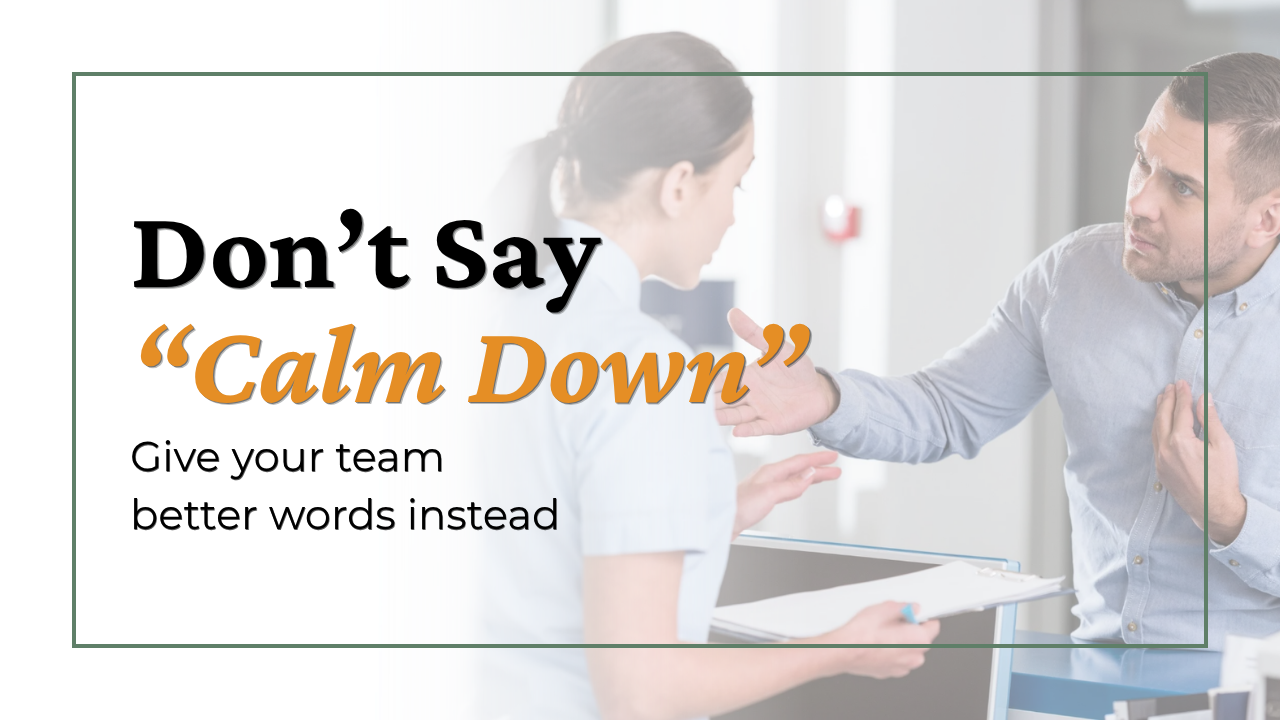
They've been in your waiting room longer than they expected.
Now they're standing at the window, already frustrated.
“Nobody told me it was going to take this long.”
What happens next?
The first sentence the desk reaches for can either lower the temperature or turn frustration into a fight.
And if that sentence is “You need to calm down,” I can almost promise you which direction the conversation is going.
THE FIRST WORDS MATTER
An upset patient may be scared, in pain, worried about the bill, or simply tired of feeling like no one is listening.
Your team cares. They want to help. But caring doesn't automatically give someone the right words in a difficult moment.
That's why every practice needs shared language.
When the patient is already upset, give the desk a sentence they can reach for:
“I can see you're frustrated. Help me understand what happened.”
That sentence does three important things.
It recognizes the emotion.
It shows the patient that someone is listening.
And it moves the conversation toward what actually happened.
Your team hasn't agreed with everything the patient said. They haven't made a promise they can't keep. They've simply opened the door to a productive conversation.
GIVE THE CONVERSATION SOMEWHERE TO GO
A better first sentence is only the beginning. Your team also needs a simple way to move through the rest of the conversation.
I teach the LAST model:
Listen.
Apologize.
Solve.
Thank.
LAST.
Start by listening long enough to understand the patient's concern.
Then apologize for the experience. An apology can acknowledge what the patient went through without assigning blame.
Next, solve what you can. Explain the available options and what the patient can expect next.
Finally, thank the patient for bringing the concern to your attention.
That might sound like:
“I can see you're frustrated. Help me understand what happened.”
Then:
“I'm sorry you had that experience. Let me see how I can help.”
And once you understand the issue:
“Here's what we can do, and here's what you can expect next.”
The facts may stay exactly the same. The patient may still need to wait. The authorization may still be pending. The answer may still be no.
But now the patient knows someone heard them, took their concern seriously, and helped them understand the next step.
That is what good service feels like.

SHARED LANGUAGE CREATES CONSISTENCY
Without shared language, every person at the desk handles an upset patient differently.
One person may become defensive. Another may immediately call the manager. Someone else may avoid the conversation altogether because they're afraid of making it worse.
Shared language gives the team confidence.
They don't have to invent the right response while a patient is standing in front of them. They already have a calm, respectful place to begin.
It also gives your patients a more consistent experience.
The words may come from different people, but the message remains the same:
"I see that you're frustrated. I'm listening. Let's figure out what happens next."
WATCH ONE MOMENT AT THE WINDOW
Here's my challenge for you this week.
Spend a few minutes near the front desk when the practice is busy.
Listen to the first sentence the desk uses when a patient is upset.
Then give your team this sentence:
“I can see you're frustrated. Help me understand what happened.”
Talk through what comes next using LAST.
Listen.
Apologize.
Solve.
Thank.
Practice it together until the words feel natural.
Your team should have the words ready before the difficult moment arrives.
Upset patients will still walk through your door.
Five-star is what happens next.
Monday is Labor Day. If your practice is closed, I hope you and your team get a real day of rest.