Patient Communication Training for Medical Practices (Every Patient Is a VIP)
May 22, 2026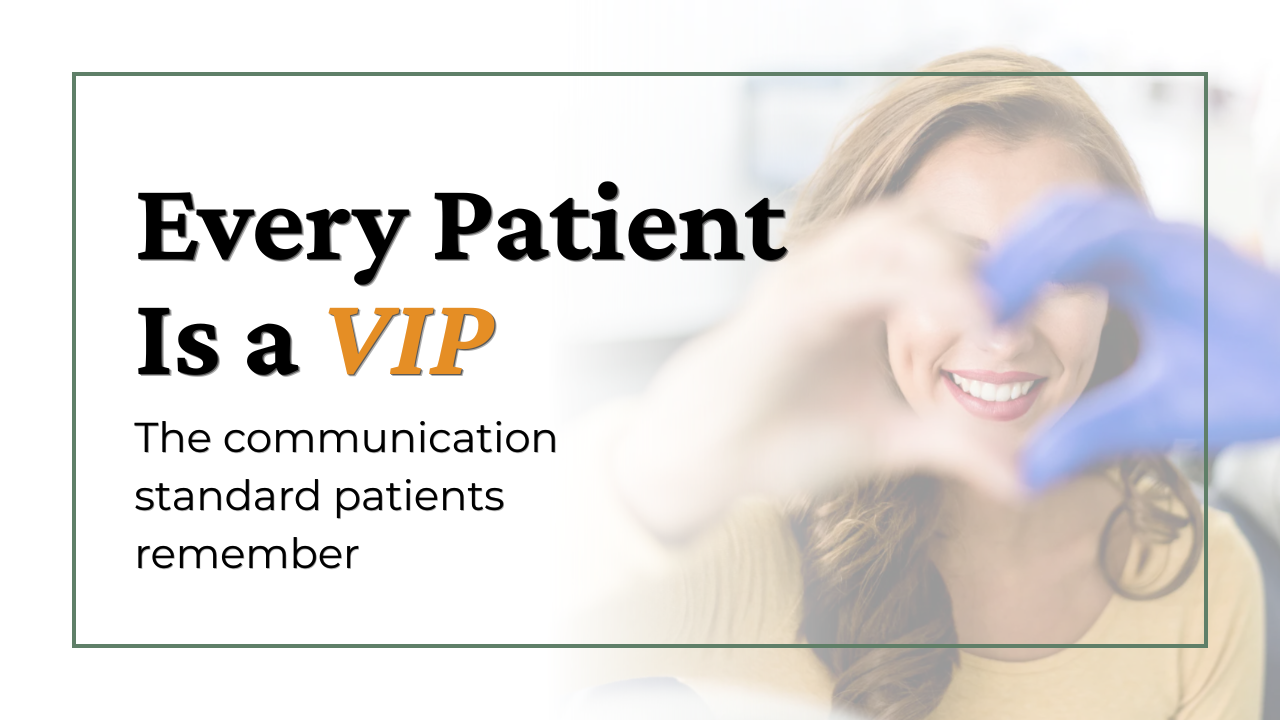
I was on site at a practice in Dallas this week when I saw something at the front desk that stopped me.
A patient had just finished her visit. Checkout was done. She had her paperwork in hand and was turning to leave. The front office supervisor noticed that the patient was having trouble walking, stepped out from behind the desk, and said, “Let me get the door for you and walk you out.”
The patient looked at her, surprised, and said, “Wow.”
The supervisor smiled and said, “You are a VIP.”
That was it. Three seconds. One small exchange. And the patient walked out feeling completely cared for.
Here is what stopped me. The visit was already over. The supervisor had nothing to gain. No transaction left to complete. No problem to solve. She just saw a patient who needed a hand and made sure she got one.
Later, I asked her about it. She did not hesitate. She said, “I treat every patient the way I would want my mom or my grandmother to be treated.”
That is not a script. That is a standard.
Why this moment matters
The supervisor did not stumble into the right words. She had something stronger than a script. She had a standard. And once you have a standard like that, you do not have to think about whether to help the patient at the door. You already know.
This is the heart of what I teach in Everyone’s a VIP. Every patient is a VIP. Not the ones with the best insurance. Not the ones who have been with the practice the longest. Every patient. Treated the way you would want your own family treated.
When your team believes that and knows how to show it, you get moments like the one I just witnessed. Patients feel seen. They feel cared for. And they tell other people about your practice.
But communication is not always about warmth
Here is the part I want to be honest about.
Patient communication is not only about kindness and welcome. Some days the front desk is dealing with a patient who is upset about a bill. Or a phone call from someone whose appointment got moved. Or a checkout conversation that has the potential to go sideways fast.
In those moments, your team needs something different. They need de-escalation skills. They need language that opens a door instead of slamming one. They need to know what to say when a patient says, “No one told me about that charge,” or “I have been waiting too long,” or “This is unacceptable.”
Warmth handles the easy moments. Training handles the hard ones.
A team that has both is unstoppable. A team that has only one is exposed.
What this looks like across the patient journey
When communication is trained at every touchpoint, you can feel the difference walking in the door. Here is what it looks like.
- The phone call. Your team answers warmly, listens fully, and never makes a patient feel like a number.
- The check-in. Patients are greeted by name when possible, offered help when needed, and given clear expectations about wait times.
- The exam room. Staff explain what is happening next so patients are not left wondering.
- A difficult moment. When something goes wrong, your team takes ownership of the communication instead of getting defensive.
- The walk out. Patients leave feeling cared for, even when the visit included money conversations, long waits, or hard news.
None of this is luck. All of it is trained.
The shift I want you to take with you
Ask your team a simple question this week. If your mom or your grandmother walked into our practice tomorrow, would she be treated the way you would want her treated?
The strongest practices I work with do not have naturally gifted communicators on every shift. They have leaders who decided that communication was too important to leave to chance. They set a standard, they trained the team to meet it, and they protected it every day.
They trained for the welcome. They trained for the warmth. And they trained for the hard conversations too.
That is what turns a practice into the one patients tell their friends about.
If you want to give your team the same foundation that supervisor in Dallas had this week, you can take a look at Everyone’s a VIP here:
Everyone’s a VIP: Mastering Patient Communications for Excellence
It is the training your team will reach for again and again, in the easy moments and the hard ones.