Emergency Preparedness for Medical Practices: A Simple 4-Step Plan
Aug 14, 2026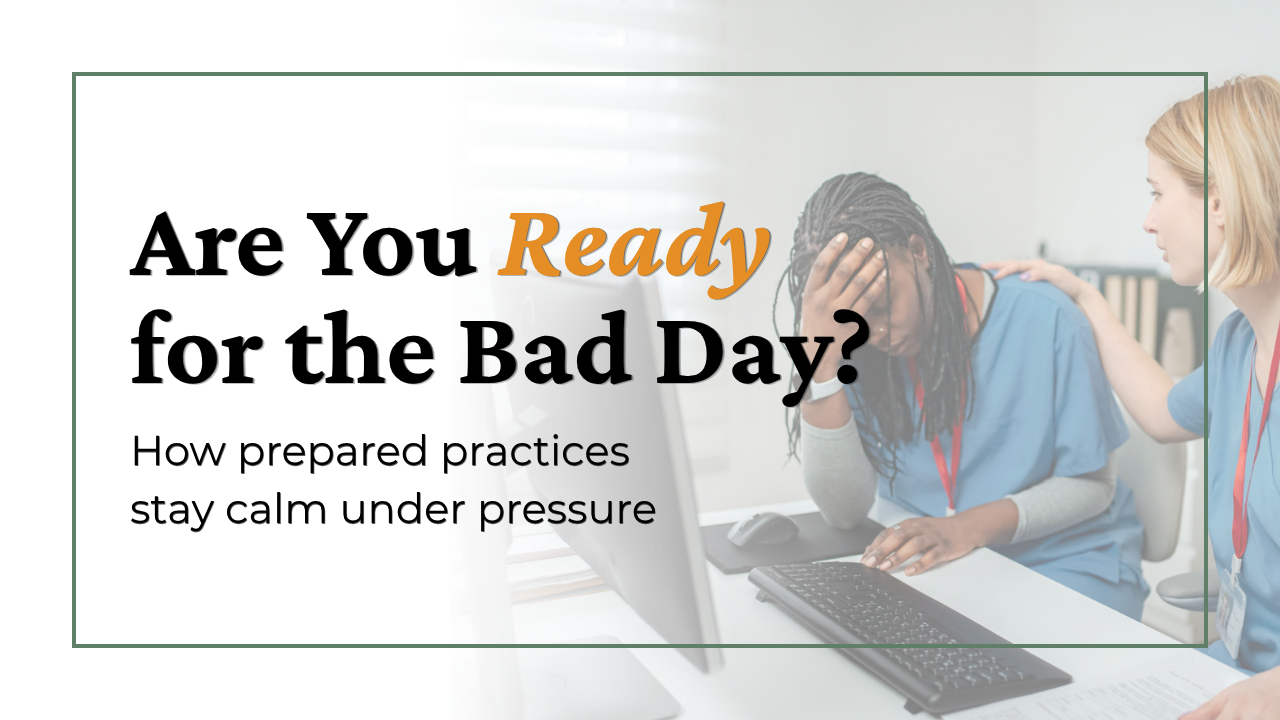
Last week, a 21-year-old flight instructor named Emily Shelton was giving a student his very first flying lesson near Pensacola when the oil pressure dropped and the smell of burning oil filled the cockpit. She couldn't make it back to the airport. So she declared an emergency, lined the plane up with Interstate 10, slipped under a highway sign, and landed in the middle of traffic.
Nobody was hurt. The plane wasn't even damaged. Her student, on his first lesson, watched her do it.
Afterward, she didn't talk about bravery. She talked about training. She had practiced that exact emergency so many times that when it happened for real, she knew what to do.
I woke up thinking about her this week, because practice managers and physician owners climb into that seat all the time.
She didn't land that plane because she has nerves of steel.
She landed it because she had rehearsed the emergency long before it ever happened.
Calm isn't a personality trait. It's a byproduct of preparation.
Your cockpit moments
Think about the emergencies that show up in a medical practice without warning:
🟠 Your front desk lead quits with no notice, on a fully booked Monday.
🟠 A patient faints in the hallway right after a blood draw.
🟠 A patient trips and falls in your parking lot on the way to their car.
🟠 You get word that Medicare auditors will be in your office tomorrow morning.
None of these are hypothetical. I've watched every one of them happen in real practices. And in each case, the outcome had very little to do with luck and everything to do with whether the person in the seat had a plan.
No time for the manual
One of the aviation experts interviewed after that landing made a point that stuck with me. When a plane is low and losing power, there's no time to pull out the manual and look up the procedure. It has to already be in you.
Your practice works exactly the same way. When a patient is on the floor of your hallway, that's not the moment to figure out who calls 911, who stays with the patient, who manages the waiting room, and what gets documented. When the audit notice arrives, that's not the moment to discover that your policies haven't been updated in three years, or that nobody can put their hands on the current malpractice certificates and credentialing files.
The plan has to exist before the emergency does.
Write the plan now
Here is a simple way to start this week.
Step 1: List your most likely emergencies.
Four categories cover most of what actually happens: people (a sudden resignation, a key seat empty with no notice), patients (a medical event on site, a fall, an aggressive visitor), facility (phones down, EHR down, power out), and compliance (an audit notice, a records request, a possible breach).
Step 2: Write a one-page plan for each.
Who takes charge. Who calls whom. What happens in the first ten minutes. What gets documented. Keep it to one page, so your team can actually use it under pressure. If it takes a binder, nobody will open it.
Step 3: Rehearse it.
Take fifteen minutes in a staff meeting and talk one scenario all the way through. It'll feel a little awkward the first time. That's fine. Emily Shelton practiced her emergency dozens of times before she flew it once for real.
Step 4: Store the plans where people can find them.
A plan nobody can locate at 8:05 on a Monday morning is the same as no plan. Put it in one known place, tell everyone where that place is, and check it stays current.
Ready for the bad day
I have been writing to you about the hyper-organized practice, and this is the part people miss. Organization isn't about tidy checklists on a good day. It's about being ready on the bad day. The practices that stay calm in a crisis aren't staffed by calmer people. They're run by leaders who prepared before the engine ever sputtered.
That's exactly why I'm building something new. This fall, I'm launching the Practice Leaders Inner Circle. It's for practice managers and physician owners who want to be prepared for the day-to-day and for the emergencies, so when it's your turn to land the plane, you can do it with a steady hand. I'll share more soon.
If you want to be the first to hear when doors open, just reply to this email and say something like "tell me more about the Inner Circle." I'll make sure you're on the list.
Here's the shift I want you to take with you:
You can't schedule an emergency. But you can decide, today, whether your practice meets the next one prepared or surprised.